

Kitchen Cabinets & Vanities Blog
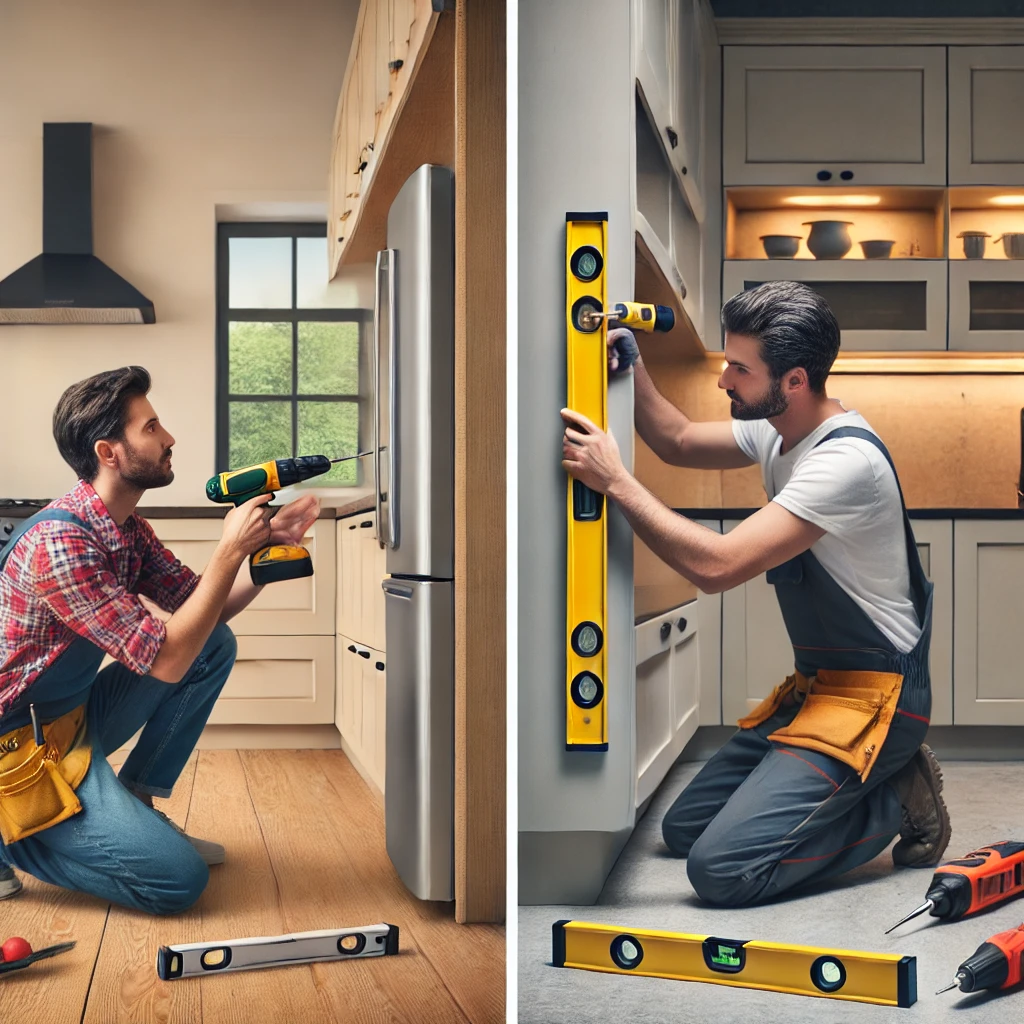
Kitchen cabinets are the backbone of a remodel. They don’t just affect how your kitchen looks. They decide whether your counters sit right, your doors align cleanly, and your storage works smoothly for years. That’s why the installation choice matters so much: do you install cabinets yourself (DIY), or hire a professional?
Both options can work. The best answer depends on your skill level, your timeline, your tolerance for risk, and how important a flawless finish is in your home. At House of cabinet, the traditional approach still holds true: plan carefully, measure precisely, and choose the method that protects the quality of the final result.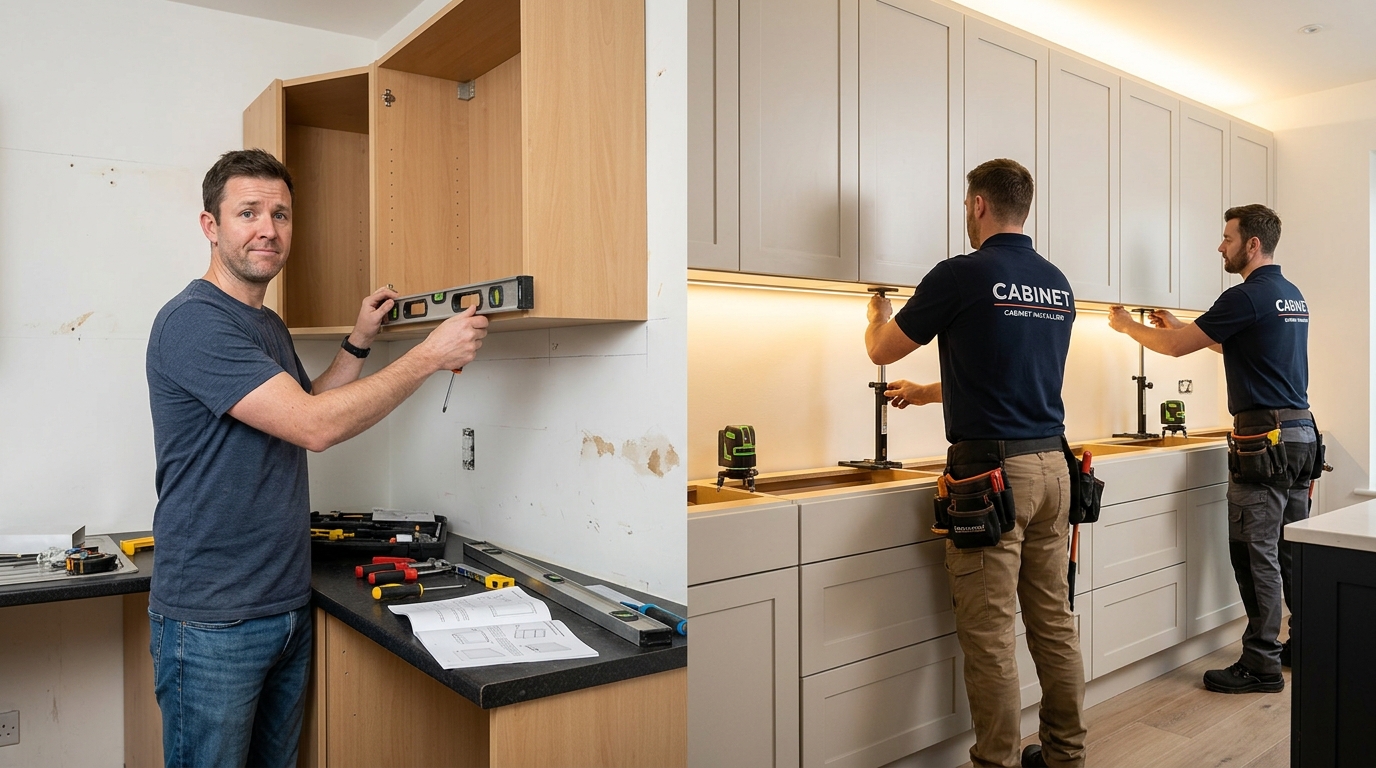
What DIY Cabinet Installation Really Means
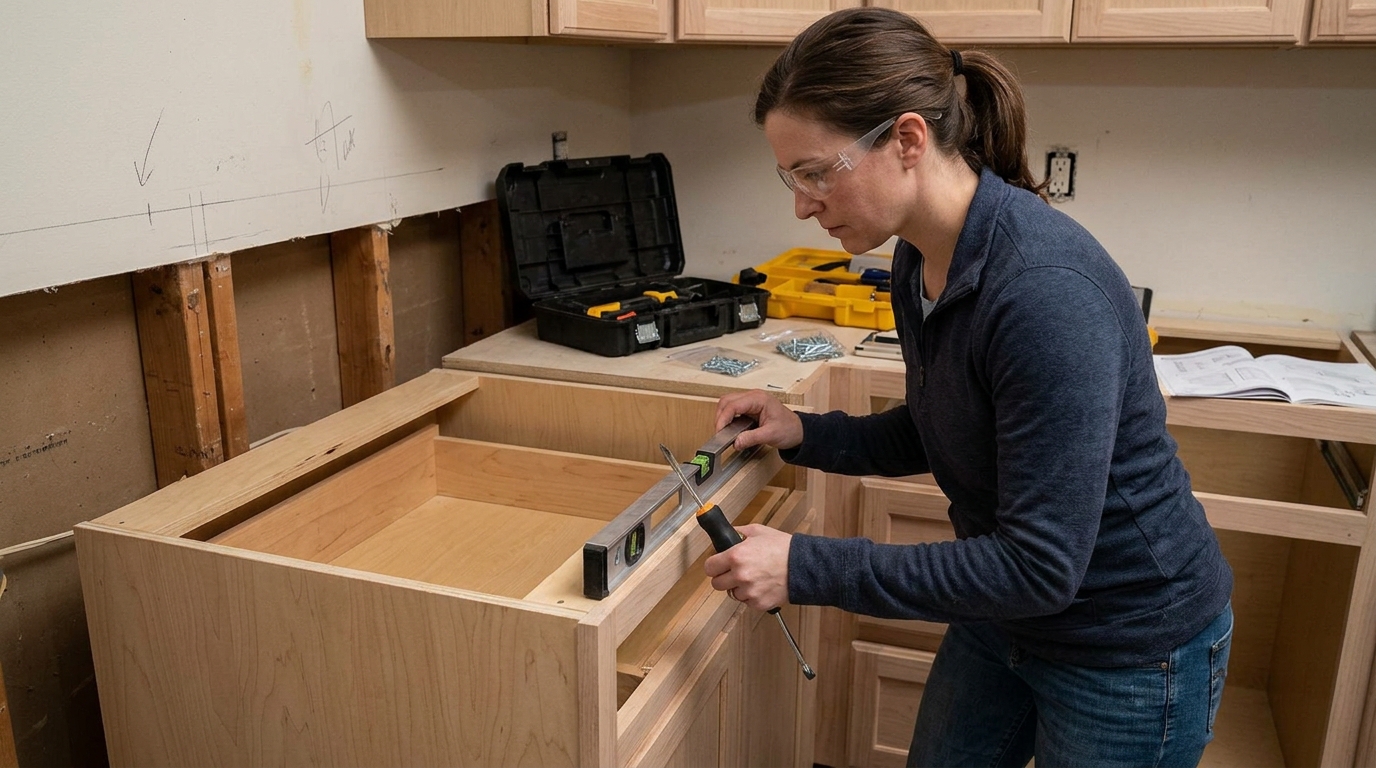
DIY installation isn’t just “screwing cabinets to the wall.” A proper cabinet install requires you to create a system that is level, plumb, square, and consistent across multiple runs. Most kitchens—especially older homes—have floors that slope and walls that bow. Your job in DIY is to correct those issues with layout lines, shims, and careful sequencing.
The real tasks you’ll handle
DIY cabinet installation typically includes:
-
Removing old cabinets (if needed) and preparing the walls
-
Finding studs and marking fastening points
-
Establishing level reference lines for base and wall cabinets
-
Hanging wall cabinets securely and straight
-
Leveling and anchoring base cabinets
-
Installing filler strips, end panels, and trim
-
Adjusting doors, drawers, and hardware for clean alignment
DIY works best when the layout is simple
DIY becomes more manageable when:
-
You have a straight wall run (fewer corners and transitions)
-
The kitchen is not heavily custom (few odd angles)
-
You’re not dealing with major plumbing or electrical complications
-
You have a clean staging area to assemble and organize parts
If your kitchen includes an island, tall pantry banks, or multiple corners, the complexity rises quickly.
DIY Pros: Where DIY Can Be a Smart Decision
DIY can be a strong choice when it fits the situation. It’s not about proving anything—it’s about matching the install method to the project reality.
Lower cash cost (labor savings)
Labor can be a significant portion of a cabinet project. If you have the tools and time, DIY can free budget for better cabinet specs, upgraded countertops, or higher-quality hardware.
Flexible pacing
DIY lets you control the timeline. You can work evenings or weekends and pause when needed. For some homeowners, that flexibility is worth more than speed.
Personal control
If you’re detail-oriented, DIY can deliver a great outcome—especially if you treat it like a precision project rather than a rushed weekend job.
DIY Cons: The Risks Most People Underestimate
DIY can also be expensive—just in a different way—if mistakes force rework or lead to visible finishing problems.
Tools and technique matter more than enthusiasm
Cabinets must be installed with accurate layout lines, proper fastening, and careful shimming. Without the right tools, you end up improvising—and improvisation shows.
Mistakes compound
Cabinet installs are sequential. If the first base cabinet is out of level, every cabinet attached to it inherits the problem. You may not notice until doors are hung or countertops are measured, when fixing it becomes harder.
Finish quality is where DIY often struggles
Even if the cabinets are solidly installed, a kitchen can look “DIY” when:
-
filler strips are uneven
-
end panels don’t align cleanly
-
reveals vary from cabinet to cabinet
-
crown molding or toe kicks look wavy
Those details are what make a kitchen look custom and expensive.
Why Professional Installation Often Wins
Professional installation is usually about reducing risk and compressing the timeline. Pros have done the same corrections dozens (or hundreds) of times: out-of-level floors, bowed walls, tricky corners, and inconsistent framing.
Professional pros
Hiring a pro often delivers:
-
Faster install with fewer delays
-
Cleaner alignment across all cabinet runs
-
Better finish details (fillers, trim, panels)
-
Less risk of structural or measurement errors
-
A smoother path to countertops and appliance installs
In real remodel life, speed isn’t just convenience. It reduces disruption, especially if you’re living in the home during the project.
Professional cons
Professional installation does add cost, and quality varies by installer. A poorly chosen installer can create issues just as easily as a DIY mistake. That’s why selection matters.
Cost: The Most Common Decider, But Not the Only One
A realistic comparison includes more than “DIY is free.”
DIY costs to plan for
DIY installation can include:
-
Tool purchase or rental
-
Extra fasteners, shims, and cabinet screws
-
Replacement parts if something is damaged or miscut
-
Time cost (especially if your schedule is limited)
-
Help for lifting and positioning wall cabinets
Professional costs to plan for
Professional installation includes labor, but it may also reduce waste:
-
fewer miscuts
-
fewer damaged parts
-
fewer do-overs
-
fewer delays to countertops and plumbing
A practical rule: if your layout is complex or your kitchen is a daily necessity, paying for installation can be worth it.
Time and Disruption: The Hidden Pressure
Many homeowners underestimate how disruptive cabinet installation can be.
DIY timeline reality
DIY often stretches because:
-
work happens in short windows
-
each step requires cleanup and resetting tools
-
unexpected wall/floor issues slow progress
-
you’re juggling other responsibilities
Professional timeline advantage
Pros usually install faster because they:
-
work full days
-
already have solutions for common problems
-
have specialized tools ready
-
know efficient sequencing
If you have only one kitchen, the timeline matters more than most people expect.
Skill and Tools: A Clear Decision Framework
A clean way to decide is to assess your readiness honestly.
DIY is a good fit if:
-
You can measure accurately and follow a layout plan
-
You understand level/plumb/square and how to correct each
-
You can anchor cabinets securely into studs
-
You have patience for adjustments and finishing details
-
You have a safe space to stage cabinets
You should strongly consider a pro if:
-
Your floors are noticeably uneven
-
Your walls are not straight (common in older homes)
-
You have multiple corners, tall pantry runs, or an island
-
You’re installing expensive countertops that demand precision
-
You cannot afford a visible “close enough” outcome
The Hybrid Approach: Often the Best Value
There is a middle path that works very well for many projects.
What you do yourself
-
Demo and removal
-
Wall patching and painting
-
Marking stud locations
-
Planning layout lines and staging cabinets
-
Simple hardware installation
What the pro handles
-
Hanging and leveling cabinets
-
Tricky corners and transitions
-
Filler strips and scribing
-
End panels, trim, crown, toe kicks
-
Final adjustments for door and drawer alignment
This approach controls cost while protecting the parts of the job that most affect the final look.
Final Recommendation
Choose DIY if you have the tools, the time, and the discipline to treat cabinet installation like precision work. When done right, DIY can deliver a strong result and keep your budget flexible.
Choose professional installation if you want speed, consistency, and the highest likelihood of a flawless finish—especially in complex kitchens or when you’re investing in premium materials.
At House of cabinet, we like decisions that stand up over time. Cabinets are not the place to gamble. If you want the kitchen to feel “built right” for the long run, choose the install path that protects alignment, finish quality, and your peace of mind.