

Kitchen Cabinets & Vanities Blog
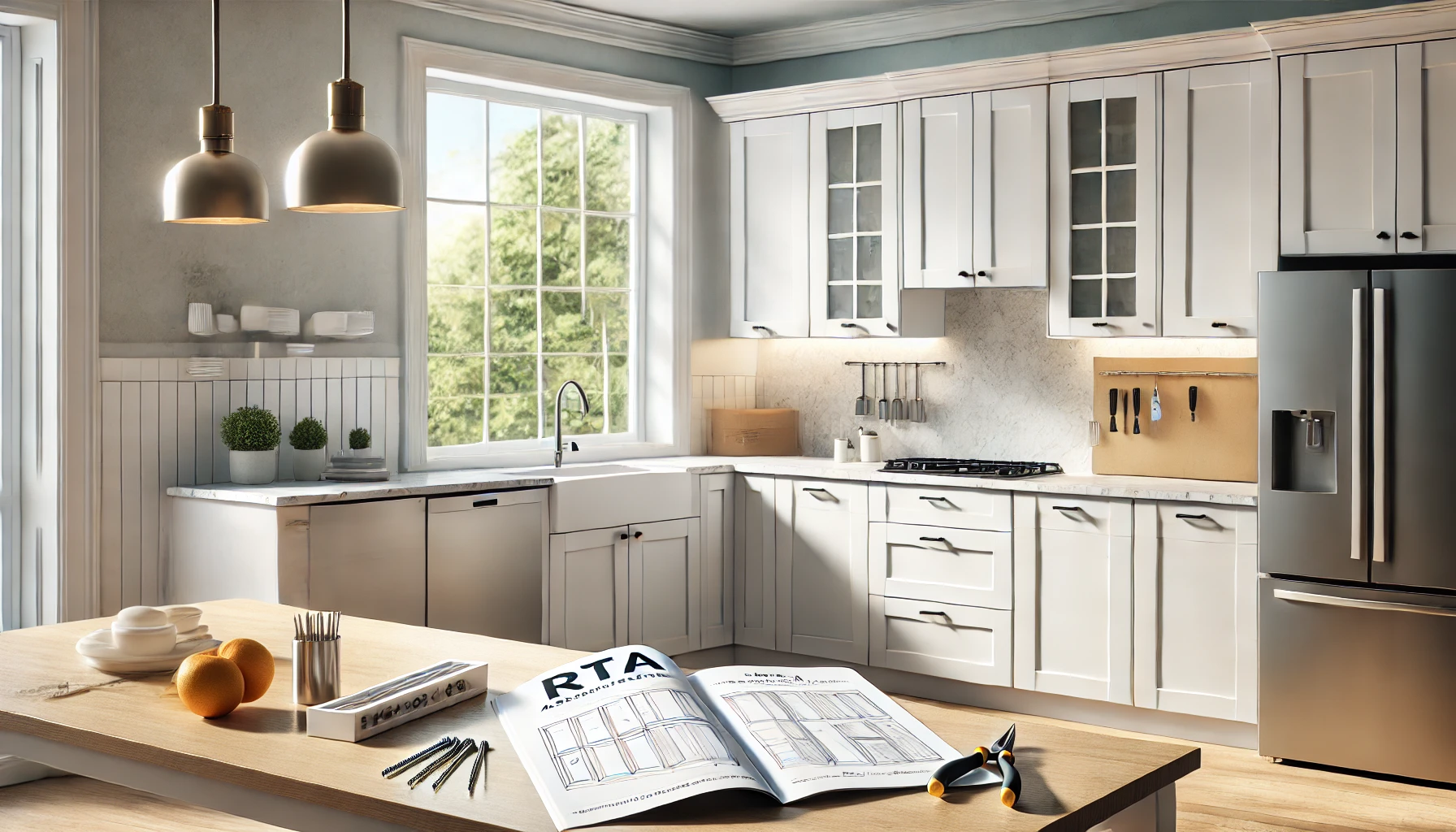
Choosing kitchen cabinets is one of those decisions that quietly controls everything else—your budget, your timeline, and even how “finished” the space feels on day one. If you’re comparing ready-to-assemble (RTA) cabinets and pre-assembled cabinets, you’re already asking the right question: Which option fits the way I actually live and remodel?
The good news is that both can be a smart choice. The better news is that the “right” answer becomes obvious once you look at five practical factors: cost, time, skill level, shipping/logistics, and expected durability.
At House of cabinet, we see homeowners succeed with both routes—especially when they pick based on reality, not just a label.
What Are RTA Cabinets?
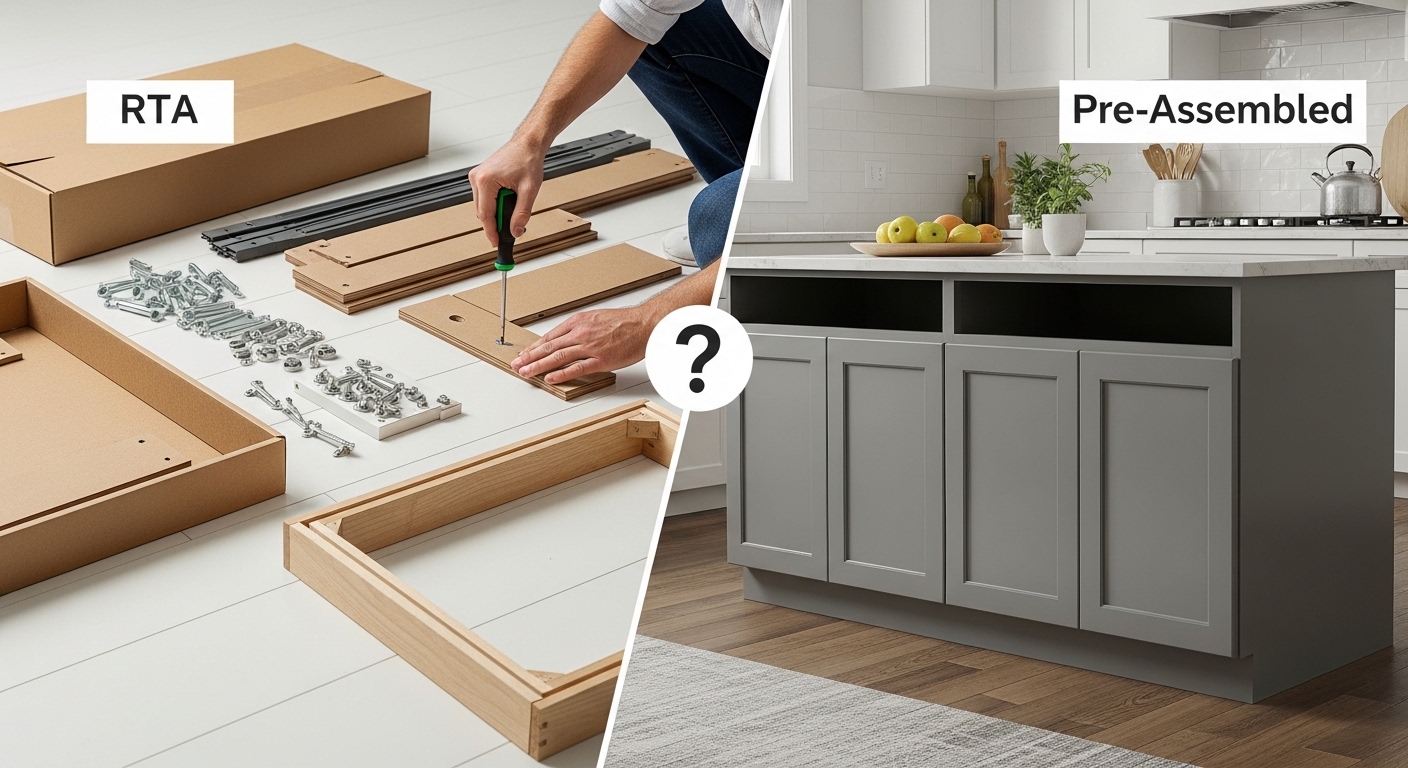
RTA cabinets arrive flat-packed with the parts, hardware, and instructions needed for assembly, and they’re built on-site by you or your installer.
Why RTA exists (and why it’s popular)
RTA’s biggest advantage is efficiency: flat packs generally reduce shipping bulk, and you’re not paying a factory to do the final assembly step.
Best fit for RTA
RTA tends to be ideal when you want:
-
Better budget control
-
Flexible delivery and storage
-
The option to DIY (or pay a pro to assemble)
What Are Pre-Assembled Cabinets?

Pre-assembled cabinets ship as complete cabinet boxes that are already built at the factory—so installation can start immediately once they arrive.
Why pre-assembled can feel “easier”
There’s no assembly step to manage, no sorting parts, and fewer opportunities for a small mistake to create a big alignment problem.
Best fit for pre-assembled
Pre-assembled cabinets tend to be best when you want:
-
A faster path to installation
-
More predictable workmanship out of the box
-
Less project coordination at home
RTA vs. Pre-Assembled Cabinets
1) Cost: Where the real difference comes from
In most projects, RTA cabinets are typically more cost-effective because the cabinets ship flat and the assembly labor is handled by the homeowner or installer rather than the factory.
Pre-assembled cabinets usually cost more because:
-
Factory labor is included
-
Shipping can be more expensive due to size and volume
A practical way to think about it:
If you’re paying a contractor to assemble RTA cabinets anyway, your savings may shrink—but you can still benefit from easier shipping and storage.
2) Time: What you save (and what you spend)
Time is where the two options can flip in value depending on your situation.
RTA requires time for:
-
Unboxing, staging, and organizing
-
Assembly (and quality-checking the assembly)
-
Cleanup and disposal of packaging
Pre-assembled saves time because:
-
Cabinets are ready to install when delivered
If you’re on a strict remodel timeline—especially with a busy household—pre-assembled often reduces friction simply because there are fewer steps.
3) Skill level: Be honest about the learning curve
RTA cabinets aren’t “hard,” but they do require care. Incorrect assembly can affect alignment, durability, and the look of door reveals.
Choose RTA if:
-
You’re comfortable with measuring, squaring, and following instructions
-
You have a clean space to assemble (garage, basement, spare room)
-
You can stay consistent across many boxes (that’s the real challenge)
Choose pre-assembled if:
-
You don’t want assembly to become the project
-
You’d rather focus energy on layout, finishes, and installation quality
4) Shipping & logistics: Space matters more than people expect
This is the hidden factor that can make your decision for you.
RTA shipping advantages
Flat packs often:
-
Take less space on delivery trucks
-
Are easier to move through tight doorways and stairs
-
Reduce the chance of certain transit damage types
Pre-assembled shipping considerations
Because cabinets ship as full boxes, they can:
-
Cost more to deliver
-
Require more space to stage
-
Be more vulnerable to dents if mishandled
If you live in a townhouse, condo, or a home with limited staging space, RTA can be the calmer experience.
5) Quality & durability: Not a category, a specification
A lot of homeowners assume pre-assembled is always “better quality.” What’s more accurate is this:
-
Factory assembly can reduce user error and provide consistent build precision.
-
RTA quality varies—but strong materials and good joinery can perform extremely well when assembled correctly.
So instead of treating “RTA vs. pre-assembled” as a quality debate, focus on:
-
Box material (plywood vs. particleboard/furniture board)
-
Joinery method (dowels, cams, staples, glue blocks)
-
Drawer construction and glides
-
Warranty and support
Bottom line: a well-built RTA cabinet assembled carefully can outperform a lower-grade pre-assembled cabinet.
Who Should Choose RTA Cabinets?
RTA is usually the right move if you prioritize:
-
Budget-first remodels
-
DIY satisfaction (or you have a handy friend/team)
-
Better delivery flexibility
-
Staging in a smaller space
RTA “green lights” checklist
Pick RTA if you can say yes to most of these:
-
I have a dry, clean area to assemble cabinets.
-
I can dedicate time (or pay for assembly).
-
I’m okay with a few extra steps to save money.
-
I want more flexibility in how cabinets arrive and move into my home.
Who Should Choose Pre-Assembled Cabinets?
Pre-assembled is usually the right move if you prioritize:
-
Speed and simplicity
-
Minimal project complexity
-
Consistency from the factory
-
A smoother install timeline
Pre-assembled “green lights” checklist
Pick pre-assembled if you can say yes to most of these:
-
I need the kitchen back fast.
-
I don’t want assembly in my home.
-
I have room to stage larger boxes safely.
-
I’d rather pay more to reduce moving parts in the project.
Common Scenarios
“I’m doing a full kitchen remodel with a contractor.”
If your contractor charges for assembly, ask whether they prefer:
-
RTA delivered to them for assembly, or
-
Pre-assembled delivered ready to hang
In contractor-led projects, pre-assembled often wins for speed, but RTA can still make sense if delivery and staging are easier.
“I’m renovating a rental or investment property.”
RTA is often attractive here for cost control and repeatable logistics—especially if you’ve assembled the same line before.
“I’m upgrading my forever home.”
Either option can work. In a long-term home, what matters most is spec quality (materials, hardware, finish durability) and installation precision.
Final Take: Which One Should You Choose?
Choose RTA cabinets when you want value, delivery flexibility, and you can manage (or outsource) careful assembly.
Choose pre-assembled cabinets when you want the fastest path to installation, fewer steps at home, and predictable factory-built convenience.