

Kitchen Cabinets & Vanities Blog
Most kitchens are designed around a “standard” base cabinet depth. But real homes aren’t always standard. Narrow galley kitchens, small condos, older homes with tight walkways, and remodels with awkward door swings often need a smarter approach. That’s where shallow base cabinets come in.
Shallow base cabinets are exactly what they sound like: base cabinets with a reduced depth that help you regain clearance, improve traffic flow, and create storage where full-depth cabinets would make the room feel cramped. When planned well, they can make a kitchen feel larger—even without changing the footprint.
At House of cabinet, we like solutions that respect a classic principle: function first, then beauty. Shallow base cabinets are a practical tool for designing a kitchen that actually works.
What Are Shallow Base Cabinets?
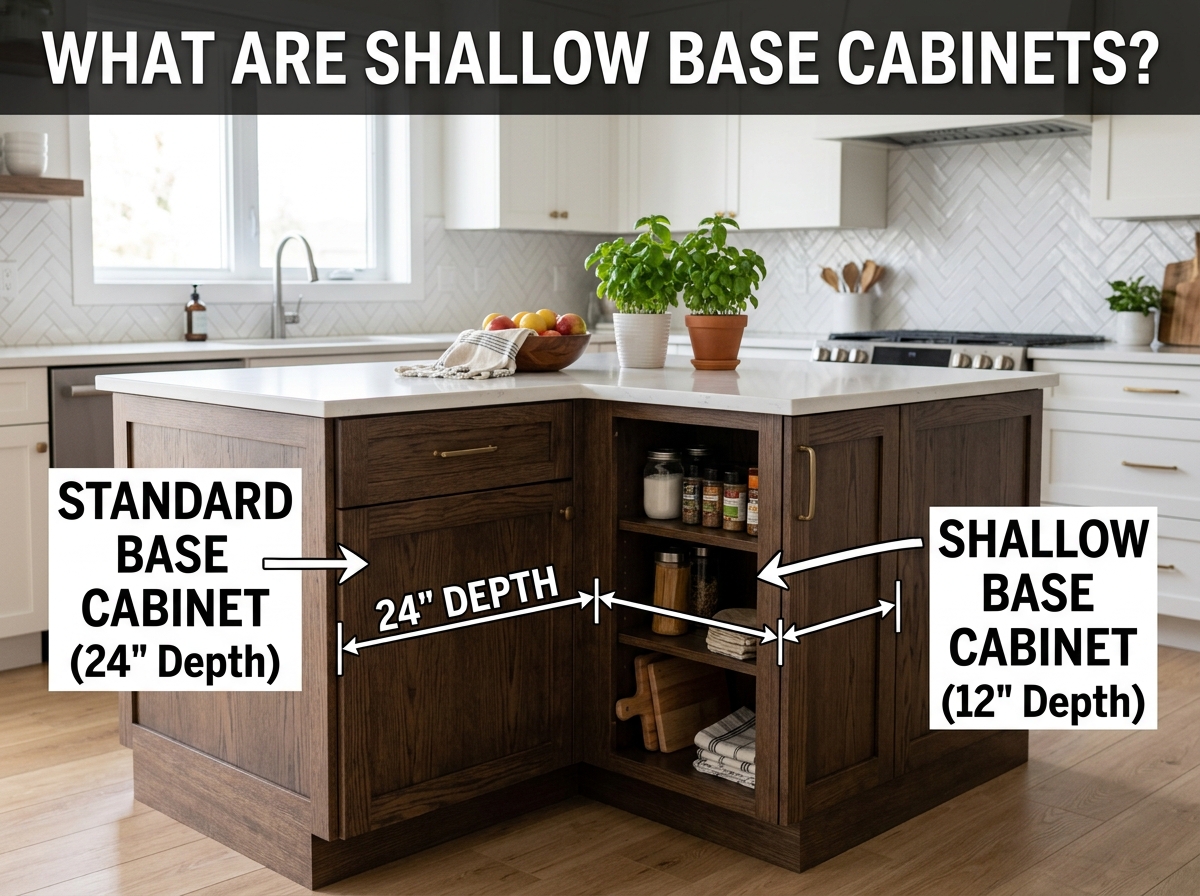
A shallow base cabinet is a base cabinet built with less depth than standard base cabinetry. The purpose is to preserve walkway space and reduce visual and physical bulk while still providing valuable storage.
They’re used in places where a full-depth cabinet run would:
- block movement
- pinch clearance near islands or peninsulas
- interfere with doors or appliances
- make a narrow kitchen feel tighter than it needs to be
Shallow base cabinets are not a compromise when used correctly. They’re a layout strategy.
Standard Base Cabinet Depth vs Shallow Depth
Most standard base cabinets are designed to support standard countertop depth and typical kitchen workflows. Shallow base cabinets reduce that depth to solve specific space problems.
Common depth ranges you’ll see
While exact sizes vary by cabinet line, shallow base cabinets are often found around:
- 12″ deep (very common for utility and tight zones)
- 15″ deep (balanced—still functional, more storage)
- 18″ deep (a popular “semi-shallow” option)
- 21″ deep (slightly reduced, still feels standard to many users)
The best depth depends on what you’re storing and how tight your clearance needs to be.
Practical rule: if you need a meaningful improvement in walkway comfort, 15″–18″ is often the sweet spot. If you’re building a secondary run (like a coffee bar), 12″–15″ can be perfect.
When Shallow Base Cabinets Make the Most Sense
Shallow bases are most valuable when they solve a real circulation issue. Here are the most common scenarios.
Narrow galley kitchens
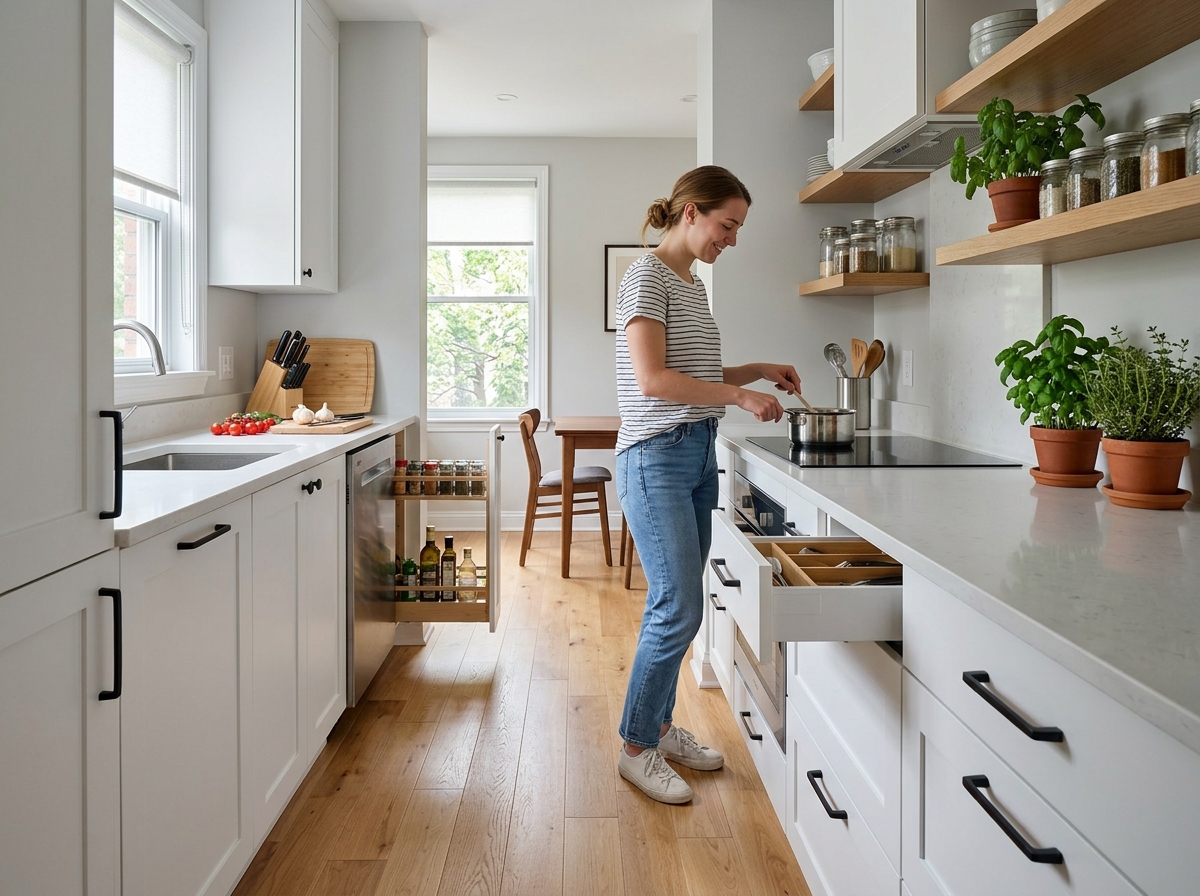
In galley kitchens, two opposing runs can feel tight. Reducing one run’s depth can significantly improve the walkway and make the kitchen feel less restrictive.
Best approach: keep the main work zone full-depth, and make the secondary run shallow—especially if it’s more for storage than heavy prep.
Tight clearances near islands and peninsulas
Sometimes a kitchen layout almost works, but the distance between base cabinets and an island is uncomfortable. A shallow base on one side can restore comfortable movement without changing the whole plan.
Walkways near doors and traffic paths
Doors swinging into a kitchen, hallways running alongside cabinetry, or high-traffic routes can all benefit from reduced depth. Shallow bases prevent that “squeezed” feeling that makes a kitchen frustrating.
Pantry or secondary storage zones
If you want extra storage but don’t have room for full-depth cabinets, shallow base cabinets can create a dedicated zone for:
- small appliances
- baking supplies
- dry goods overflow
- serving items
Appliance-adjacent solutions
In some kitchens, shallow cabinetry can help around:
- refrigerator clearances
- dishwasher areas
- tight corners where full-depth cabinets force awkward filler plans
The goal is always the same: reduce friction.
What You Can Store in Shallow Base Cabinets
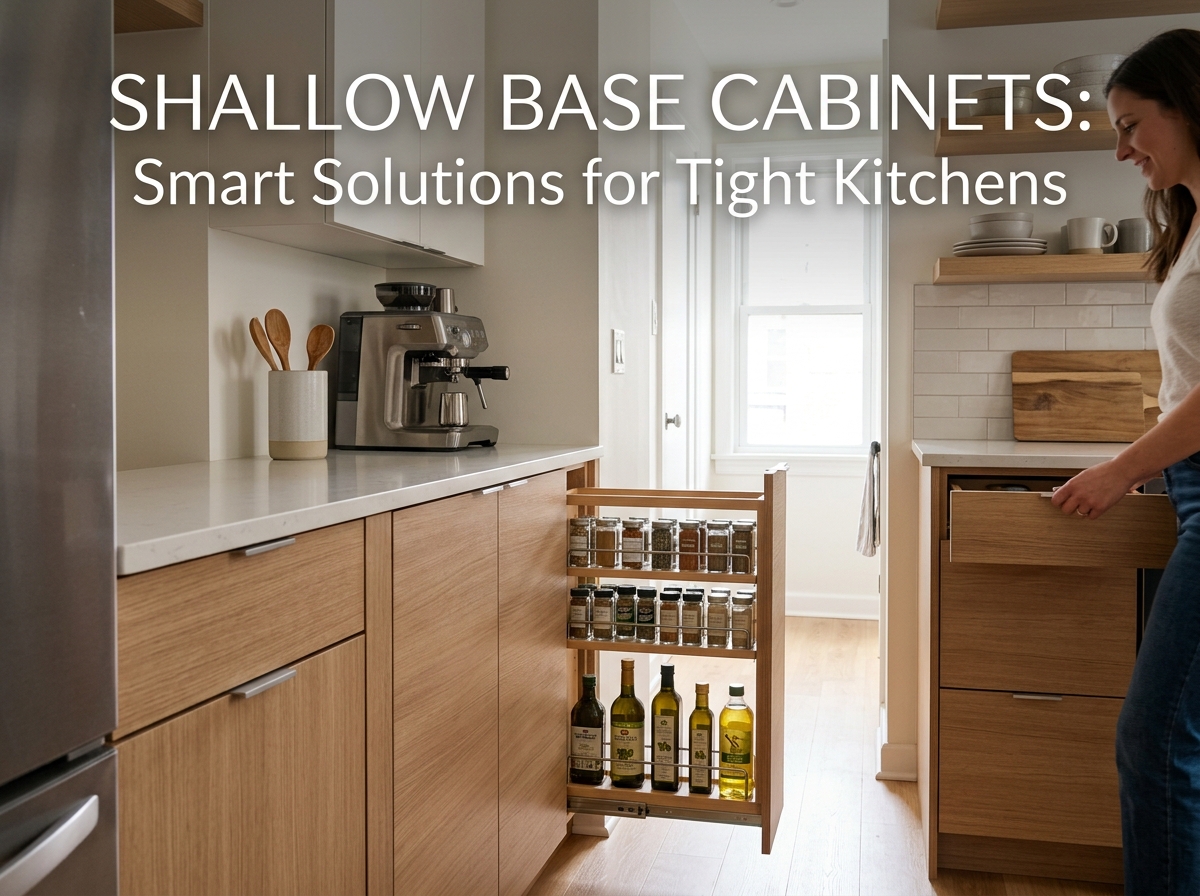
A common concern is “Will I lose too much storage?” The answer is: not if you store the right things.
Shallow base cabinets work extremely well for:
- plates and bowls (especially in drawers)
- spices and oils (with organizers)
- baking trays (vertical dividers)
- small appliances (stand mixer accessories, blenders)
- pantry-style bins
- linens and towels
- cleaning supplies (in a controlled zone)
They are less ideal for:
- large pots and deep pans (unless you use wider shallow drawers)
- bulky appliances that require depth
- heavy storage that needs deep retrieval space
Best strategy: use shallow bases for organized, frequent-use storage—then keep a full-depth zone for bulky items.
Countertops With Shallow Base Cabinets
Countertop planning is critical. You have two main options.
Option 1: Reduced-depth countertop (matches cabinet depth)
This creates a very clean look and maximizes walkway space. It’s common in secondary runs, coffee stations, and tight galley zones.
Option 2: Standard-depth countertop with cabinet set-back
This keeps standard countertop depth but leaves an overhang. It can work, but it must be planned carefully so it doesn’t feel awkward or unsafe.
House of cabinet guidance: for most kitchens, reduced-depth counters look cleaner on shallow bases unless you have a specific seating or overhang purpose.
Design Tips: Make Shallow Cabinets Look Intentional
The biggest mistake is making shallow bases look like an afterthought. The best kitchens make them look planned.
Use them as a “feature run”
Treat the shallow side as a dedicated zone:
- beverage station
- baking station
- buffet-style storage
- coffee bar
When the purpose is clear, the design feels intentional.
Keep the finish consistent
Use the same door style and finish so the shallow run looks like part of the kitchen—not a different system.
Use drawers when possible
Drawers make shallow cabinets feel more usable. A shallow drawer can still hold a lot, and it eliminates the “digging” problem that shallow shelves sometimes create.
Add smart organizers
Shallow cabinets become premium when you add:
- spice dividers
- vertical tray storage
- pull-out bins
- drawer inserts
Organization is what makes shallow storage feel luxurious rather than limiting.
Shallow Base Cabinets vs Shallow Wall Cabinets
Don’t confuse the two. Shallow wall cabinets are common and often used above appliances or in tight areas. Shallow base cabinets are different because they affect:
- countertop depth
- workflow and prep space
- walkway clearance
Shallow bases are more of a layout decision, not just a storage choice.
Common Mistakes to Avoid
Choosing shallow cabinets everywhere
If you go shallow on your primary prep run, you may lose too much working depth and make daily cooking less comfortable. Keep the main work zone full-depth whenever possible.
Ignoring appliance and plumbing needs
Some zones require depth:
- sink plumbing
- dishwasher integration
- range and venting alignment
Plan shallow bases away from areas that demand full depth unless the cabinet line provides a specifically designed solution.
Poor countertop planning
A shallow cabinet with an awkward counter overhang can look and feel wrong. Decide countertop strategy early.
No storage plan
Shallow storage only feels good when it’s organized. If you don’t plan what goes where, you’ll feel like you “lost space” even if the kitchen works better.
Are Shallow Base Cabinets Worth It?
Yes—when your kitchen layout needs them. Shallow base cabinets can deliver one of the most valuable improvements in a remodel: better movement and comfort. Many homeowners underestimate how much quality-of-life comes from proper clearance.
A kitchen that feels spacious is usually a kitchen that is planned well, not one that is physically larger.
Final Thoughts
Shallow base cabinets are a smart, forward-thinking solution for tight kitchens, narrow layouts, and remodels where clearance matters. They improve traffic flow, reduce the “crowded” feeling, and can create highly functional storage zones when paired with drawers and organizers.
At House of cabinet, we see shallow base cabinets as a tool for designing kitchens that feel intentional and comfortable—classic planning with modern practicality. If your kitchen feels tight today, this is one of the cleanest ways to make it feel better without changing the footprint.