

Kitchen Cabinets & Vanities Blog

Cabinet doors are the “face” of your kitchen. They shape the mood, define the lines you see every day, and influence whether the room feels warm and classic or clean and contemporary. That’s why the choice between Shaker cabinets and modern cabinets matters so much. It isn’t just a design preference—it affects maintenance, storage behavior, hardware choices, and long-term satisfaction.
The good news is simple: both can be timeless when they fit the home and the details are executed with discipline. Below is a clear guide to help you choose the style that matches your architecture, your lifestyle, and the kind of kitchen you want to live with for years.
What Shaker Cabinets Are
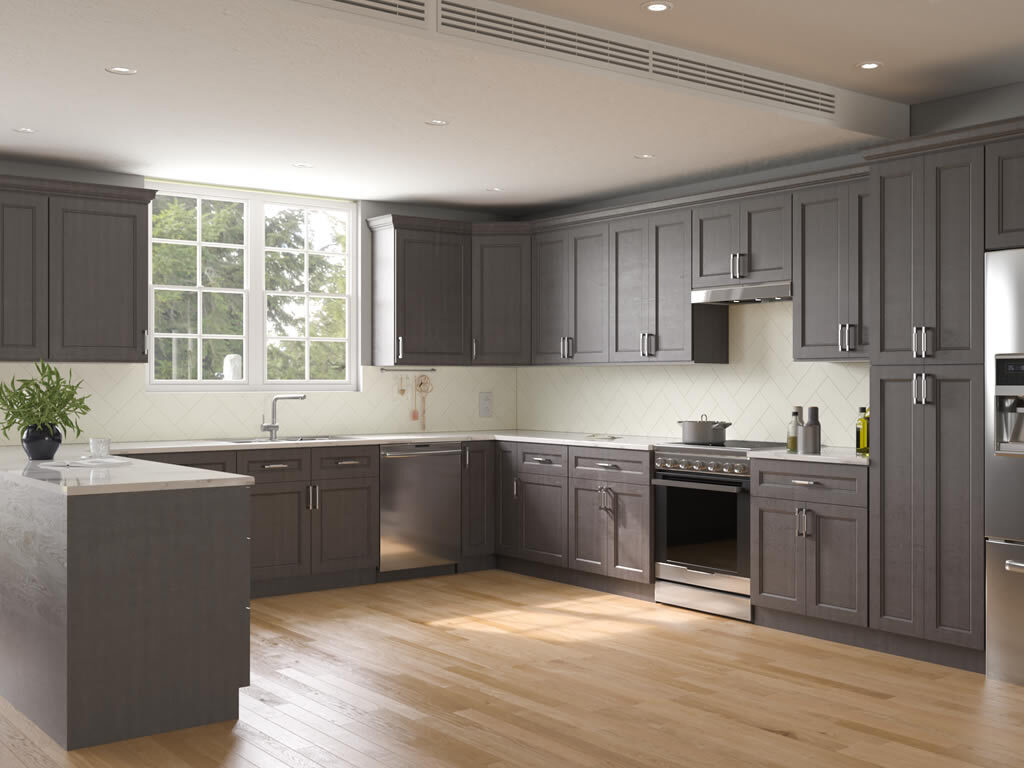
Shaker cabinets are built around a simple frame-and-panel door:
- a flat center panel
- a clean, squared frame (usually a five-piece door)
They were born from a practical design philosophy: honest construction, minimal ornament, and function-first simplicity. That’s why Shaker has never really gone out of style.
What Shaker communicates
Shaker reads as:
- timeless and balanced
- warm and approachable
- structured without being busy
- flexible across many home styles
In other words, Shaker cabinets are the “safe classic” that still looks current.
What Modern Kitchen Cabinets Are
Modern cabinets typically refer to a sleek, minimalist approach:
- flat-panel (slab) doors or very slim profiles
- minimal hardware, edge pulls, or touch-latch systems
- fewer visual breaks and cleaner runs
Modern cabinetry aims for clarity: fewer details, stronger geometry, and a more architectural look.
What modern communicates
Modern reads as:
- clean and intentional
- contemporary and streamlined
- visually quiet
- design-forward and sharp
Modern cabinets feel best when the entire kitchen design supports that same restraint.
Quick Difference Summary
Shaker: timeless, versatile, warm classic
Modern: minimal, sleek, architectural clean
If you want a kitchen that feels “comfortable and forever,” Shaker usually leads.
If you want a kitchen that feels “crisp and current,” modern usually leads.
Which Style Fits Your Home’s Architecture?
This is the most reliable way to decide.
Shaker usually fits best in:
- traditional homes (colonial, farmhouse, classic suburban)
- transitional interiors (a blend of old and new)
- homes with detailed trim, warmer floors, or classic window styles
Shaker doesn’t fight architectural detail. It supports it.
Modern usually fits best in:
- contemporary homes and newer builds
- open-concept layouts with clean trim
- spaces with large windows and minimal ornament
Modern cabinetry looks most natural when the home already leans modern.
The truth about most homes
Many homes are transitional—even if the owners don’t call them that. In that case:
- Shaker is the safest long-term match
- Modern works best when the rest of the home is also clean-lined
How Each Style Affects the Feel of the Kitchen
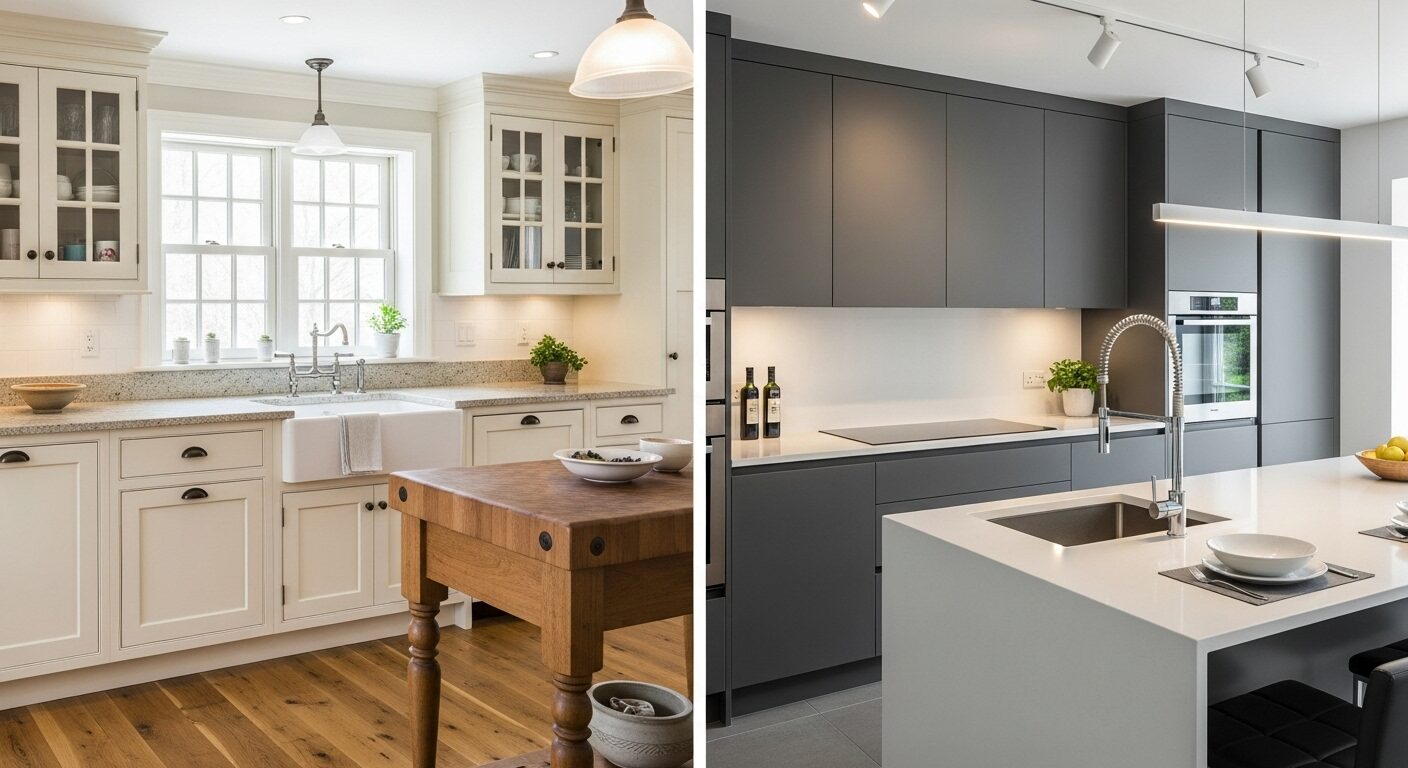
Shaker adds texture through shadow lines
That frame creates subtle depth. It helps a kitchen feel finished even with simple finishes.
Modern relies on “perfect surfaces”
Because modern doors are flatter and simpler, everything else becomes more noticeable:
- alignment and reveals
- finish consistency
- hardware placement
- lighting reflections
Modern looks incredible when installed precisely, and slightly “off” when details are sloppy.
Maintenance and Daily Living

This is where homeowners often decide without realizing it.
Shaker maintenance
- Slightly more detail to wipe (frame edges)
- More forgiving visually if there are small marks or wear
- Great for families and everyday-heavy kitchens
Modern maintenance
- Easy wipe-down because doors are flat
- Fingerprints and smudges can show more, especially on dark colors
- Finish quality matters more (cheap finishes look cheap faster)
If you prefer low-maintenance “forgiving” cabinetry, Shaker usually wins.
If you value quick wipe-downs and don’t mind the occasional fingerprint visibility, modern can be excellent.
Cost Considerations
Cost depends more on construction and finish than on style alone, but there are common patterns.
Shaker cost reality
Shaker is widely produced, available in many cabinet lines, and often offers strong value across price tiers. It’s also easier to “dress up” with hardware and lighting.
Modern cost reality
Also modern can lean higher when you want:
- high-quality slab doors
- premium finishes (matte, textured, lacquer-like looks)
- handleless or specialized hardware systems
Modern can still be budget-friendly, but the look is less forgiving—so you want decent specs and careful installation.
Resale and Long-Term Appeal

Shaker resale advantage
Shaker is broadly liked. It’s considered classic, safe, and adaptable. If resale flexibility matters, Shaker is often the lowest-risk cabinet style.
Modern resale advantage
Modern kitchens can feel premium and “high-end new” in the right market—especially in newer neighborhoods and design-forward areas. But modern is more taste-specific.
If you’re planning for the widest buyer appeal, Shaker usually has the edge.
Best Pairings for Each Style

Shaker pairs best with:
- warm whites and soft neutrals
- marble-look or subtly veined countertops
- brushed nickel, brass, or matte black hardware
- classic backsplash patterns (subway, simple textures)
Modern pairs best with:
- clean quartz or large-format slab looks
- minimal hardware (or integrated pulls)
- matte finishes and controlled color palettes
- simpler backsplashes with fewer competing patterns
A timeless rule: the more minimal the cabinets, the more disciplined everything else should be.
Shaker vs Modern: A Decision Checklist
Choose Shaker if:
- your home leans traditional or transitional
- you want timeless warmth and flexibility
- you want a style that forgives daily wear
- you value broad resale appeal
Choose Modern if:
- your home leans contemporary with clean lines
- you want an architectural, minimalist look
- you’re willing to keep finishes and details disciplined
- you want the kitchen to feel sleek and visually quiet
The “Best of Both” Option: Transitional Modern

If you’re torn, there’s a practical middle path:
- Slim Shaker (a modern-leaning Shaker profile)
It gives you clean lines and a tailored look without the full commitment to slab minimalism.
For many homeowners, slim Shaker is the sweet spot: classic structure, modern feel.
Final Thoughts
Shaker and modern kitchen cabinets can both be the right choice. The best decision comes from matching the cabinet style to your home’s architecture, your lifestyle, and your tolerance for maintenance and precision details.
If you want a kitchen that feels timeless and welcoming, Shaker is usually the safest win. If you want a kitchen that feels crisp, streamlined, and contemporary, modern cabinetry can look incredible—especially when the installation and finish discipline are strong.