

Kitchen Cabinets & Vanities Blog

When homeowners start planning a kitchen remodel, one of the first real decisions is where to buy cabinets. Two names come up almost every time: Home Depot and Lowe’s. Both are well-known, both offer broad cabinet selections, and both can support projects ranging from simple upgrades to full kitchen renovations. The challenge is figuring out which one fits your budget, timeline, and design goals.
The House of Cabinet topic on this subject is timely because cabinet shopping is no longer just about picking a color. Today, homeowners are comparing cabinet categories, customization flexibility, lead times, and installation convenience before they commit. The right choice can save money, reduce delays, and make the entire kitchen feel more polished in the end. The House of Cabinet page itself is listed as a comparison of Home Depot and Lowe’s kitchen cabinets, and search snippets indicate both retailers offer broad cabinet options from stock to more customized solutions.
At House of cabinet, the smartest approach is always the same: start with function, then choose the cabinet path that gives you the best long-term value. Below is a clean comparison to help you decide.
Why This Comparison Matters
Cabinets are one of the biggest costs in a kitchen remodel, and they also affect nearly everything else—layout, storage, installation timing, and how finished the space looks. Choosing the wrong cabinet path can create problems later, even if the style looks good at first.
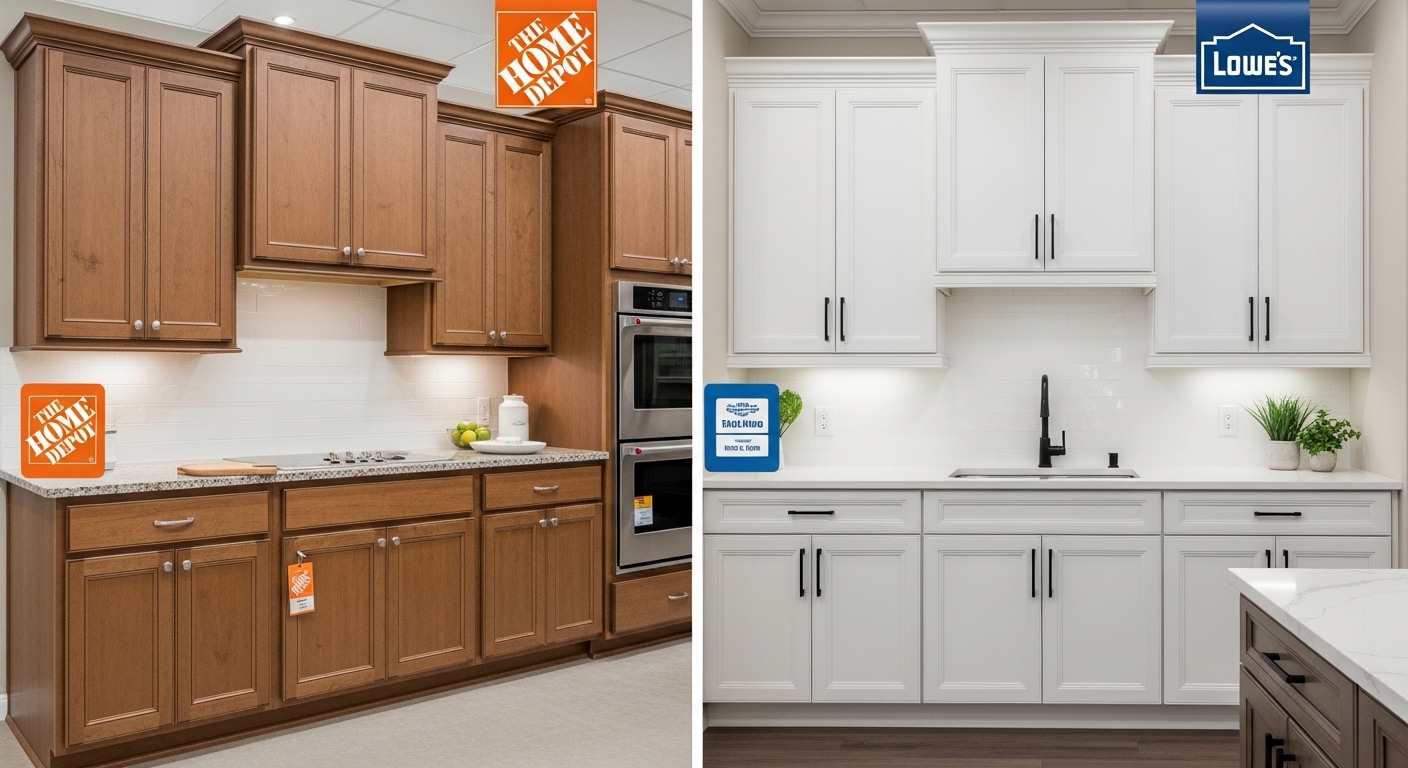
Both Home Depot and Lowe’s offer multiple cabinet types and shopping formats, which is good news for homeowners. Home Depot highlights in-stock cabinetry plus custom options, while Lowe’s clearly separates stock and semi-custom (made-to-order) categories and also offers custom cabinet programs.
That means the better question is not “Which store is better overall?” It is:
Which store is better for my project type?
The answer depends on:
-
How fast you need the kitchen completed
-
How much customization you actually need
-
Whether you want DIY, contractor install, or a mixed approach
-
How much flexibility you need in cabinet sizes and finishes
Cabinet Types at Home Depot and Lowe’s
Before comparing the stores directly, it helps to understand the three cabinet categories most homeowners will see.
Stock cabinets
Stock cabinets are pre-sized, standard options. They are usually the fastest and most budget-friendly route, but they offer fewer size and finish choices.
Lowe’s product listings explicitly label Stock (prefabricated) and Semi-custom (made to order) as production methods, which is helpful for side-by-side shopping.
Semi-custom cabinets
Semi-custom cabinets are built after ordering and typically offer more flexibility in sizes, finishes, and accessories than stock lines. Lowe’s buying guide also notes that semi-custom cabinets usually take longer to arrive and cost more than stock cabinets.
Home Depot also promotes semi-custom-style offerings through Home Decorators Collection, emphasizing made-to-order flexibility and factory assembly.
Custom cabinets
Custom cabinets are the most personalized option and usually the most expensive. Home Depot’s kitchen cabinet category mentions custom cabinets, and Lowe’s also has a custom cabinets section.
For most homeowners, the real decision is usually stock vs semi-custom, not fully custom.
Home Depot vs Lowe’s: Key Differences That Affect Your Remodel
1) Product range and shopping experience
Both retailers offer wide cabinet catalogs, but the experience can feel different depending on what you are shopping for.
Home Depot strengths
Home Depot’s kitchen cabinet category emphasizes multiple paths in one place: in-stock cabinetry, refacing, and custom options. That can be convenient if you are still deciding between a full replacement and a lighter upgrade.
Home Depot also promotes factory-assembled semi-custom cabinet options through Home Decorators Collection, which may appeal to homeowners who want a more custom look without managing RTA assembly.
Lowe’s strengths
Lowe’s does a strong job of organizing by production method and cabinet type, which can make browsing easier when you already know what you want. Its listings and buying guides clearly reference stock, semi-custom, and custom options, and the semi-custom pages highlight design flexibility and tailored configurations.
If you want a cleaner comparison process, Lowe’s category structure can feel more straightforward.
2) Customization flexibility

This is where many kitchen projects are won or lost.
If you need a simple refresh
If your layout is staying mostly the same, stock cabinets from either retailer may work well. You save money, and the decision-making process is faster.
If your layout needs better fit and function
Semi-custom becomes much more attractive when:
-
Your kitchen has awkward dimensions
-
You want specific pantry widths or drawer combinations
-
You want more finish choices and accessories
-
You are trying to avoid filler-heavy layouts
Lowe’s semi-custom pages explicitly emphasize personalized design and optimized functionality, while Home Depot’s semi-custom messaging focuses on a custom look without custom pricing. Both are strong value positions, but they speak to slightly different priorities.
3) Lead times and project timing
Kitchen remodels often get delayed because homeowners underestimate cabinet timing.
Lowe’s buying guide states that semi-custom cabinetry usually requires a longer lead time than stock cabinets and costs more. That aligns with standard remodeling reality.
Home Depot’s Home Decorators Collection messaging highlights factory-assembled semi-custom cabinets and promotes relatively fast shipping windows for certain lines. That can be a major advantage if speed matters and your chosen line is in that program.
How to use this in planning
-
Need cabinets quickly? Start by checking stock lines and fast-ship semi-custom programs.
-
Need a precise fit? Semi-custom may still be worth the extra wait.
-
On a strict contractor schedule? Confirm cabinet lead time before locking installation dates.
Quality, Assembly, and Long-Term Value
A common mistake is assuming the retailer alone determines cabinet quality. In reality, quality depends more on the specific cabinet line, materials, hardware, and assembly method.
Factory-assembled vs ready-to-assemble
Home Depot’s Home Decorators Collection specifically highlights factory-assembled cabinets for consistent quality, which can reduce user-assembly errors.
Lowe’s listings include both ready-to-assemble and fully assembled cabinet products, so homeowners can choose based on budget and install preference. Search snippets show examples of both within Lowe’s cabinet inventory.
What to evaluate regardless of store
When comparing cabinet lines at either retailer, check:
-
Cabinet box material
-
Drawer box construction
-
Hinge and slide quality
-
Finish durability
-
Assembly style (RTA vs fully assembled)
-
Warranty and support details
This is where long-term value is decided. A good cabinet line from either retailer can outperform a weaker line, even if the logo on the website looks familiar.
Design Options and Style Direction
Lowe’s cabinet category pages show a broad range of styles and features, including modern, classic, transitional, slab, and shaker styles, plus multiple finish types and materials. Home Depot also positions its kitchen cabinet offering around complete solutions that include storage and accessories, which matters for homeowners who want a cohesive package rather than just boxes.
Best approach for a timeless kitchen
For a kitchen that ages well, focus on:
-
Shaker or simple flat-panel doors
-
Neutral or warm cabinet colors
-
Quality hardware
-
Practical storage accessories
Trends come and go, but a balanced cabinet plan with strong materials and a clean layout holds value much longer.
If you want a modern look
Look for:
-
Slab or slim-shaker profiles
-
Minimal hardware
-
Matte finishes
-
Clean sightlines and fewer visual breaks
Both retailers carry styles that can work for modern kitchens, but final results depend more on your selections than the store name itself.
Which One Should You Choose?
There is no universal winner, but there is a better fit depending on the project.
Choose Home Depot if:
-
You want to compare in-stock, refacing, and custom paths in one workflow
-
You are interested in factory-assembled semi-custom lines
-
A fast-ship semi-custom option could help your timeline
Home Depot’s cabinet ecosystem is strong for homeowners who want multiple remodel paths and a simpler move into installation.
Choose Lowe’s if:
-
You want a clearer category structure for stock vs semi-custom shopping
-
You want strong semi-custom browsing and buying-guide support
-
You plan to compare style, production method, and features carefully
Lowe’s is especially useful for homeowners who want a structured cabinet selection process and easy filtering across cabinet types and styles.
Final Thoughts
If you are comparing Home Depot vs Lowe’s kitchen cabinets, the best decision comes down to your project needs—not brand familiarity alone. Both retailers offer meaningful options across stock, semi-custom, and custom categories, and both can work well when you choose the right cabinet line and plan the layout carefully.
For House of cabinet, the smartest next step is to turn this comparison into action:
-
Confirm your kitchen layout and measurements
-
Decide your cabinet category (stock, semi-custom, or custom)
-
Compare materials and assembly type
-
Check real lead times before scheduling install
-
Build around function first, then finish style