

Kitchen Cabinets & Vanities Blog
Bathroom Fixtures
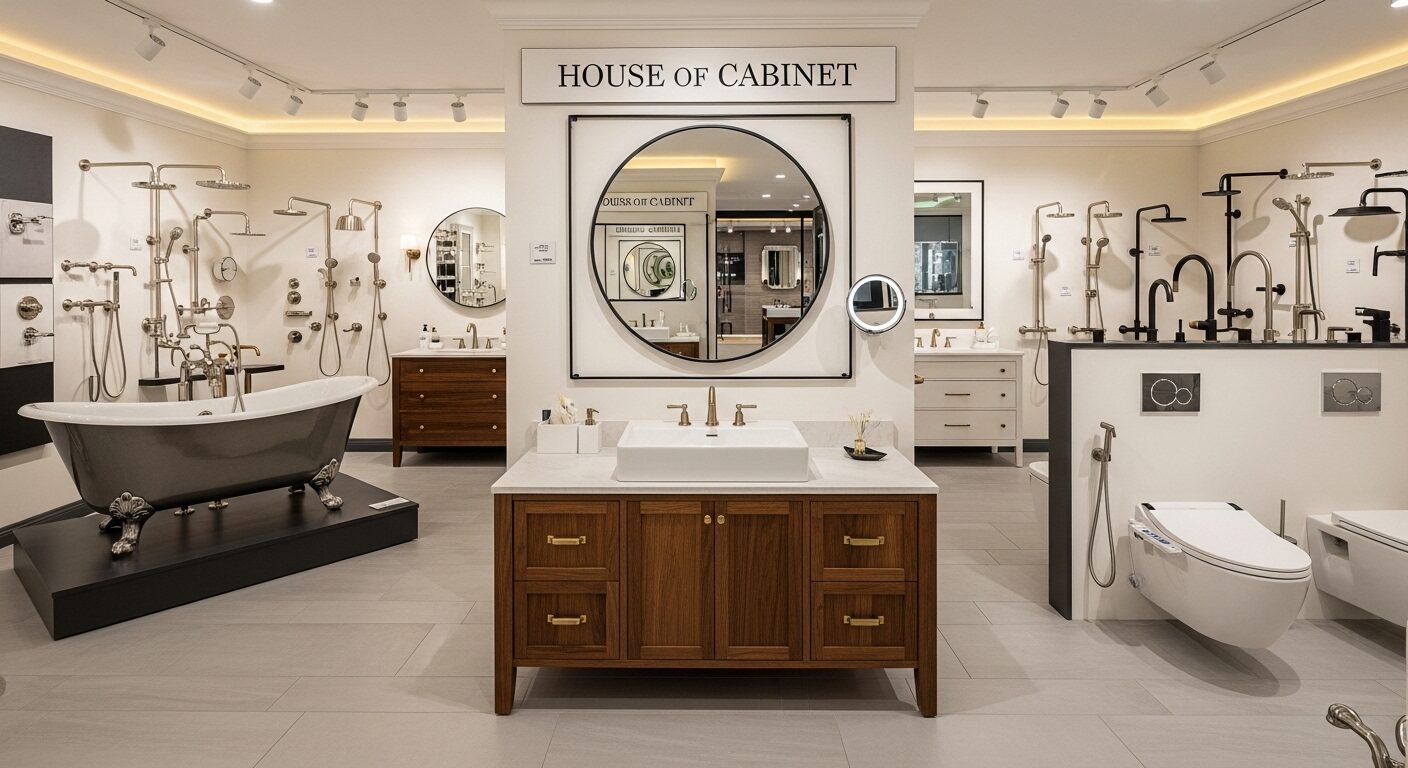
Bathroom fixtures may look like small details, but they quietly control how your bathroom feels every day. The right faucet makes handwashing feel effortless. A well-chosen shower system turns a rushed morning into a smoother routine. Even the finish—brushed nickel, matte black, brass—affects whether the room feels calm and timeless or busy and mismatched.
At House of cabinet, we treat fixture selection the same way we treat cabinetry: classic logic first, then style. Choose durable components that work with your vanity, your tile, and your daily habits. That approach creates a bathroom that looks refined today and still feels right years later.
This guide covers the core fixture types, the finish choices that work best, and the planning rules that help you build a bathroom that feels cohesive, comfortable, and easy to maintain.
What Counts as “Bathroom Fixtures”?
Bathroom fixtures typically include:
- Faucets (sink faucets, widespread vs single-hole, wall-mount vs deck-mount)
- Shower systems (valves, showerheads, handhelds, tub fillers)
- Toilets (standard, comfort height, wall-hung)
- Bath accessories (towel bars, hooks, paper holders, robe hooks)
- Valves and drains (often overlooked but critical for performance and style)
Some homeowners also include lighting and mirrors in the “fixture” conversation because they coordinate with finishes, but the core set is plumbing fixtures and matching hardware.
Start With the Vanity: Fixtures Must Match the Cabinet Plan
Most fixture problems begin when homeowners choose a faucet before they choose the vanity or sink. It should be the other way around.
1) Choose the vanity and sink first
Your sink determines faucet compatibility:
- Drop-in sinks have different hole options than undermount sinks.
- Vessel sinks require taller faucets or wall-mount options.
- Integrated countertop sinks often guide faucet placement and spread.
2) Confirm faucet hole configuration
The sink or countertop will typically support:
- Single-hole faucet
- Centerset (usually 4-inch spread)
- Widespread (typically 8-inch spread)
If you choose the wrong faucet type, you’ll end up with extra holes or a faucet that simply won’t fit.
3) Plan clearance and comfort
A faucet should have enough height and reach to avoid splashing and feel comfortable to use. In small bathrooms, the wrong faucet reach can make daily use annoying.
Sink Faucets: The Most Touched Fixture in the Room
Your sink faucet is the fixture you’ll use most often. It needs to look good and feel good.
Popular faucet styles
- Single-handle: simple, modern, easy to use
- Double-handle widespread: classic, refined, often more “luxury”
- Wall-mounted: modern and clean, but requires correct rough-in planning
What makes a faucet feel premium
- Smooth handle operation
- Stable mounting (no wobble)
- A finish that resists spotting and wear
- Strong aeration (good flow without splashing)
Maintenance reality
Some finishes show water spots more easily. If your household prefers low maintenance, choose finishes and faucet shapes that clean easily.
Shower Fixtures: Where Comfort Meets Function
Shower systems are a high-impact upgrade. They control both daily comfort and long-term reliability.
Core components
- Valve (the hidden heart of the system)
- Trim kit (visible handle and plate)
- Showerhead (rain, standard, adjustable)
- Optional handheld sprayer
- Tub spout (if you have a tub)
Best practical shower upgrades
- A quality valve system (reliability matters more than design)
- A handheld sprayer (easy cleaning, practical daily use)
- Balanced pressure and temperature control
- A showerhead that fits your water pressure reality
Traditional planning tip
Invest in the valve quality first. The visible trim can be upgraded later more easily than the internal valve system.
Toilets: Comfort and Water Efficiency Matter
Toilets are often chosen last, but they should be planned early because size and rough-in dimensions matter.
Key toilet choices
- Standard height vs comfort height: comfort height is often preferred for adults
- Round vs elongated bowl: elongated is often more comfortable but needs space
- One-piece vs two-piece: one-piece looks cleaner, two-piece is often more budget-friendly
- Water efficiency: modern toilets can reduce water usage while maintaining performance
Fit and clearance
Confirm:
- rough-in measurement (distance from wall to drain)
- side clearance to vanity or tub
- front clearance for comfortable use
A toilet that feels cramped in the space can make the whole bathroom feel smaller.
Finishes: The Style Glue That Makes Everything Look Cohesive
Finish choice is where bathrooms look “designed” or “random.” The finish is not just color—it’s a visual system.
Most popular finishes
- Brushed nickel: timeless, forgiving, easy to coordinate
- Chrome: clean, classic, often the easiest to match across brands
- Matte black: modern and bold, but can show water spots depending on finish quality
- Brushed brass / champagne bronze: warm, premium, very popular in transitional baths
- Oil-rubbed bronze: classic, warm, more traditional leaning
Choose one primary finish
A bathroom looks premium when fixtures and accessories match. Mixing finishes can work, but only when it’s intentional and limited (for example: black mirrors with brushed nickel fixtures).
Consider your water
Hard water can spot and build up faster. If you have hard water, choose a finish that cleans easily and doesn’t show every mark.
Matching Fixtures With Vanities and Cabinet Styles
This is where bathrooms become timeless.
For modern vanities (slab or minimal doors)
- matte black
- chrome
- brushed nickel
- simple linear shapes
For transitional vanities (Shaker, slim Shaker)
- brushed brass
- champagne bronze
- brushed nickel
- soft curves or clean classic lines
For traditional vanities (raised panel, furniture-style)
- polished nickel
- oil-rubbed bronze
- classic brass tones
- more detailed handles and spouts
A classic rule: when cabinetry is detailed, keep fixtures simpler. When cabinetry is simple, fixtures can carry more personality.
Accessories: Small Items, Big Impact
Accessories include:
- towel bars and rings
- robe hooks
- toilet paper holders
- shower shelves and niches
- matching drains and overflow trim
Why accessories matter
A bathroom can have a great vanity and faucet but still feel unfinished if accessories don’t match. Consistency is what makes the space feel complete.
Common Mistakes to Avoid

Choosing fixtures before confirming sink/counter holes
Always confirm hole configuration first.
Mixing finishes randomly
If you mix, do it intentionally and keep it limited.
Overspending on visible fixtures while ignoring valves
The valve is the most important shower component.
Ignoring water pressure realities
Some rain heads feel weak if pressure isn’t strong enough.
Forgetting lighting and mirror coordination
Fixtures are part of the visual system. Lighting and mirror frames should support the same direction.
A Simple Fixture Selection Checklist
Before buying:
- Confirm sink type and faucet hole configuration
- Choose one finish direction for the whole bathroom
- Decide shower system style and confirm valve compatibility
- Confirm toilet rough-in and clearance
- Match accessories to the same finish
- Plan for maintenance (water spotting, cleaning ease)
Final Thoughts
Bathroom fixtures determine how your bathroom feels every day. The best selections combine comfort, durability, and timeless style. Start with the vanity and sink, choose fixtures that fit the plumbing and the space, and use one consistent finish direction to keep the room cohesive.
At House of cabinet, the goal is always the same: bathrooms that look refined, work smoothly, and stay easy to live with for years. If you want, send the next link and I’ll continue in the same yalın, özgün, kapsamlı format.
Categories
Recent Posts
- Forevermark vs Fabuwood Cabinetry: Which One Is Better for Your Kitchen Remodel in the USA?
- 2025 Kitchen Cabinet Trends & Why Black Base Cabinets Are Taking Over
- Affordable Multi Unit Cabinets – Cost Efficient Property Renovations
- Kitchen Cabinet Frame – Structure and Support
- IKEA Kitchen Cabinets & Kitchen Planner – The Complete Guide for Your Next Remodel